
What Is the Role of Ketamine in Psychiatry and Psychotherapy?
In psychiatry, ketamine is considered a substance with a rapid onset of antidepressant action, with administration potentially leading to clinical improvement within hours to days. In addition to its pharmacological use, ketamine-assisted psychotherapy (KAP) has developed in recent years. This approach combines the biological effects of the substance with targeted psychotherapeutic work and aims to prolong and deepen the antidepressant response.
Dual Diagnosis as the Co-Occurrence of Substance Use Disorder and Another Psychiatric Condition
The co-occurrence of substance use disorder and another psychiatric illness is one of the most common and at the same time most challenging situations in clinical practice. Despite this, patients with an addiction-psychiatric dual diagnosis are often treated in a fragmented way, without an integrated approach. Data from recent years show that the consequences are not limited to persistent symptoms but include a markedly worse prognosis, with a higher risk of relapse, rehospitalization, and mortality.
Artificial Intelligence May Contribute to Earlier Detection of AMD. How Does It Work in Practice?
Artificial intelligence (AI) is finding applications in the diagnosis of various diseases, and ophthalmic conditions are no exception. In this field, AI has proven useful in retinal examinations, assisting with the analysis of digital images and detecting potential pathologies. The specifics of working with AI and the expected outcomes of its broader implementation in the Czech context were explained to us by MUDr. Eliška Martincová from the Department of Ophthalmology, Charles University Faculty of Medicine and University Hospital Plzeň.
Oncology Care Coordinators Will Shorten Patients’ Journey Through the System
In regions located farther from Comprehensive Oncology Centers (COCs), access to oncology care may generally be lower. When this is combined with so-called fast-track diagnoses, where time is critical, the patient’s prognosis is at stake. Representatives of the Voice of Oncology Patients toured individual regions to examine the details of the current situation. Their call for changes in the organization of care was heard by the Ministry of Health, and together they introduced a solution in the form of oncology care coordinators. What can we…
How Could the Gut Microbiota Be Linked to a Higher Risk of Abdominal Aortic Aneurysm Progression?
A cohort study conducted in Europe and the United States demonstrated an association between elevated blood levels of trimethylamine N-oxide (TMAO)—a metabolite produced in the presence of the gut microbiota—and an increased risk of progression of abdominal aortic aneurysm (AAA). The findings, which may enable more precise identification of patients with rapidly expanding AAAs or those requiring surgical intervention, were published in JAMA Cardiology.
AI Will Help Personalize the Treatment of Atrial Fibrillation
According to estimates, up to half a million people in the Czech Republic suffer from atrial fibrillation. The diagnosis is associated with an increased risk of serious complications and therefore requires not only regular patient monitoring but also long-term treatment and, in some cases, hospitalization, which generates significant costs. Early access to appropriate therapy is crucial for prognosis. A research team led by Ing. Jakub Hejč, Ph.D., from the International Clinical Research Center (ICRC) has decided to contribute to this effort,…
Psilocybin Approved as of January 1. What Does This Mean in Practice?
As of January 1, 2026, a new legal framework has come into effect in the Czech Republic allowing the limited therapeutic use of psilocybin in patients with severe mental health conditions. This represents the first systematic step in translating the results of long-term clinical research on psychedelics into healthcare practice. How does this change clinical practice, and what should physicians know even if they do not provide this therapy themselves?
Czech Gastroenterology Keeps Up with the Times. For 80 Years
Czech gastroenterologists have had a professional society bringing them together for eight decades. What can be considered the greatest progress in the field in recent years, which topics were highlighted at the 8th Congress of Czech Gastroenterologists, and how are they coping with current challenges in clinical practice? We discussed this with Assoc. Prof. MUDr. Ilja Tachecí, Ph.D., Head of the 2nd Department of Internal Gastroenterology and President of the Czech Gastroenterological Society of the Czech Medical Association J. E. Purkyně.
“Bites” from Clinical Research – 2026/4
In selecting this edition of “bites,” we explored new findings published in leading medical journals — ranging from the prevention of ventricular arrhythmias and early detection of pancreatic cancer to current results on oral pharmacotherapy for obesity and the treatment of migraine in children and adolescents.
Precision Psychiatry Has Its Roadmap
The Precision Psychiatry Roadmap (PPR) is designed as a dynamic process that continuously incorporates new scientific insights into the biological basis of mental disorders into current syndromes defined by clinical symptoms. This represents an important shift — from traditional symptom-based classification of diseases to precisely targeted, or precision, psychiatry.

Vaccination Is Entering a New Era Thanks to Innovative Technologies

Why Endometriosis Requires the Principles of Precision Medicine
“Clinical Research Bites” – 2026/5

Seventy Years Since the First Czech Hemodialysis
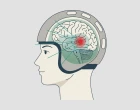
What an Ultrasound Helmet Can Do for Non-Invasive Brain Stimulation
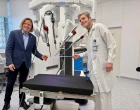
The New Robotic Operating Room at Bulovka Was Blessed by the Hospital Chaplain
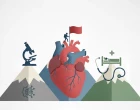
What Mountain Medicine Offers for Research and Clinical Practice

“Clinical Research Bites” – 2026/1

Reprogramming the Blood–Brain Barrier in an Alzheimer’s Disease Model

Euthanasia at the Request of Patients With Dementia? Opinions Differ
Can AI Help Accelerate the Development of Antibiotics for Gonorrhea and MRSA?

BioCog Test: Ten Minutes to Orient Yourself in a Patient’s Cognitive Status
“Clinical Research Bites” – 2025/39

Stem Cells Open the Door to New Treatment Possibilities for Multiple Sclerosis